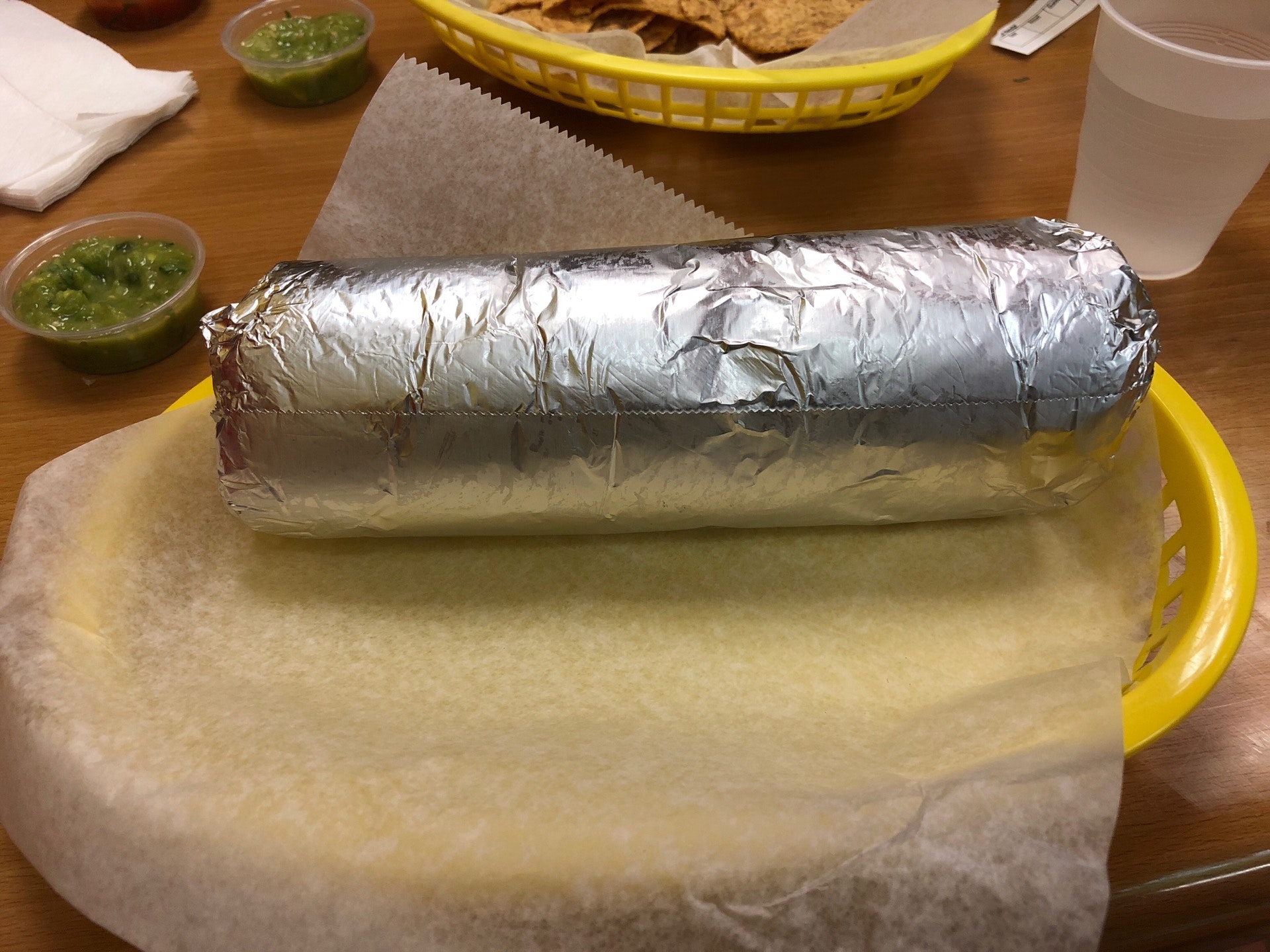
Checked in at Lisbon Humberto Delgado Airport (LIS) (Aeroporto de Lisboa Humberto Delgado) .
Ciao LIS. Time to go home.
38.7700229-9.1303017
Checked in at Lisbon Humberto Delgado Airport (LIS) (Aeroporto de Lisboa Humberto Delgado) .
Ciao LIS. Time to go home.
38.7700229-9.1303017
Checked in at Lisbon Humberto Delgado Airport (LIS) (Aeroporto de Lisboa Humberto Delgado) .
Next stop on the European road trip.
38.7700229-9.1303017
How to Have More Impactful Communication with Two Key Skills
I blinked away the tears.
Team morale was crumbling. Co-workers, many I considered friends, were leaving the company. I was at a meeting with senior leaders, and I had just expressed concern that the way the company ran projects might be hurting the team — a team that I cared so much about and where I had invested years of my life.
(more…)The Magic of Co-Leadership: Unlock a More Powerful Way to Work
I was halfway up the four-story vertical ropes course, when my course partner at the leadership retreat decided she couldn’t continue any further. We agreed she would energetically cheer me on as I continued. I kept climbing and nearly got to the top, but eventually I had to stop as well.
Looking down from the top, I initially felt some pride and surprise that I got as far as I did, despite my fear of heights. But soon afterwards, a sense of loneliness hit me — there wasn’t anyone to share the accomplishment with. Being the most effective I could be on my own only took me so far.
(more…)Checked in at Newark Liberty International Airport (EWR) .
You are the worst Newark.
40.6929715-74.1779923
RICE: Simple prioritization for product managers – Inside Intercom

Prioritization is a perennial challenge when building a product roadmap. How do you decide what to work on first?
If you’ve put the effort into brainstorming new ideas, finding opportunities for improvement, and collecting feedback, you’ll have a solid product roadmap full of good ideas. But the order in which you tackle those ideas deserves just as much thought. You need to take the time to prioritize well.
(more…)Email, the Micro-Meetings Eating Our Days – 500ish Words

“You’ve Got Mail” via Giphy
There are two things at work that everyone seems to universally hate: email and meetings. And I think the hatred stems from the same basic reason: they’re both black holes in which time enters and never returns. Sometimes such a use of time is worthwhile and necessary. But far too many emails and meetings are quagmires that distract us all from doing actual work .
(more…)What It Takes to Think Deeply About Complex Problems

hh5800/Getty Images
The problems we’re facing often seem as complex as they do intractable. And as Albert Einstein is often quoted as saying, “We cannot solve our problems with the same level of thinking that created them.” So what does it take to increase the complexity of our thinking?
Too many leaders default to looking at decisions as either-or: The answer is right or wrong, good or bad, win or lose. This binary thinking has a built-in limitation: Overrelying on any given solution eventually generates the opposite problem.
(more…)
First of many salads harvested from the garden for this summer! #salad #veggiegarden #harvest
Posted on Instagram 9:50 am, May 22, 2018
Checked in at Denver International Airport (DEN) .
Aaaaand home (for about 36 hours) — with erika
39.8497327-104.6739819
Checked in at San Francisco International Airport (SFO) .
Time to jet home again (briefly) — with erika
37.6157456-122.3856449
Delegate outcomes, not activities.
Do you consider yourself “a doer”?
That person who enjoys doing the work, fine-tuning the details, meddling in the weeds of how it’ll all work? Then you probably have trouble delegating as a leader.
I know I do.
For so many managers and leaders — especially those of us who are used to be the person doing the work and are now handing off the work to others — learning to delegate is, well, tricky, if not painful.
(more…)This was first published on my mailing list The Looking Glass . Every week, I answer a reader’s question.

Photo by Zac Turner
So this question assumes that perfectionism is something that *should* be beaten, which I don’t think is always true. For example, if I’m getting open heart surgery, I’d hope very dearly that my surgeon was a perfectionist. I’d wish the same for flight controllers at airports, nuclear weapons engineers, firefighters, the people who program self-driving cars… you get the point. In some cases, mistakes are incredibly costly. So having a rigorous culture that prevents them can be an excellent thing.
(more…)The most common problem I’ve seen in product/engineering process

The first time I became aware of this problem wasn’t at work at all. In fact, this is a common problem in any sort of situation where one party is seeking help from another party.
I was in Seattle with my boyfriend for Thanksgiving couple years ago. On Wednesday night, I realized mid-dinner I had forgotten to bring my toothbrush and toothpaste. I asked the waitress:
(more…)Checked in at San Francisco International Airport (SFO) .
What’s up SFO? — with erika
37.6157456-122.3856449

Weekday ride to blow out the cobwebs. Last chance for almost 2 weeks, with some back to back travel. #mtb #enduromtb #enduro #specialized
39.6678136-105.2578443
(more…)Checked in at Lair O’ the Bear .
39.6678664-105.2578704
This is the final part of a 6-part series of blog posts based on a talk I prepared called Successfully Derailed Product. It’s about the ways in which we define and talk about “success” influence what – and how – we build. See part 1
, part 2
, part 3
, part 4
, part 5
.
We want to be careful how we create process. The fastest way to a mediocre team is to define your process around mediocrity. A slow but sure way to a mediocre team is to define your processes to gradually push them towards putting their own self interest front and centre – like the conclusions the guy drew from the promotion process we talked about earlier .
(more…)Five Points-Whittier Neighborhood History
The Story of Five Points


The First to Extend Beyond the Bounds of Denver
Five Points and Whittier are adjoining Denver neighborhoods, and the first to extend beyond the bounds of Denver’s original Congressional Grant. Each neighborhood was created and initially shaped during a long period of growth from the early 1870s to the silver crash of 1893, a time when Denver was amongst the fastest growing cities in the United States and exemplified what the historian Gunter Barth describes as the “instant city.” Each has seen its fortunes wax and wane over a near one-and-a-half century history, and, in that time, has been home to numerous Denver communities, a connection recalled and honored long after people had dispersed.
(more…)
Another 10 mile training hike for #fjallravenclassic. This time with @akires
39.6678136-105.2578443
Posted on Instagram 9:48 pm, May 13, 2018 jQuery(document).ready(function(){ var gmap_m78620e0e5aa879d140d1cdeb915dbf5e = { positions : { 99 : new google.maps.LatLng( ‘39.667813594234’, ‘-105.25784430977’ ) }, bounds : new google.maps.LatLngBounds(), // empty for now, we’ll dynamically extend it later map : new google.maps.Map( document.getElementById( ‘gmap_m78620e0e5aa879d140d1cdeb915dbf5e’ ), { mapTypeId: google.maps.MapTypeId.ROADMAP, center: new google.maps.LatLng( 0, 0 ), zoom: 16 // Seems to be a good zoom for a single point } ), markers : {}, }; // end of gmap // Extend the bounds of interest based on our positions for ( var m in gmap_m78620e0e5aa879d140d1cdeb915dbf5e.positions ) { gmap_m78620e0e5aa879d140d1cdeb915dbf5e.bounds.extend( gmap_m78620e0e5aa879d140d1cdeb915dbf5e.positions[m] ); } // Render markers for ( var m in gmap_m78620e0e5aa879d140d1cdeb915dbf5e.positions ) { gmap_m78620e0e5aa879d140d1cdeb915dbf5e.markers[m] = new google.maps.Marker( { clickable: true, map : gmap_m78620e0e5aa879d140d1cdeb915dbf5e.map, position : gmap_m78620e0e5aa879d140d1cdeb915dbf5e.positions[m] } ); } // Redraw map to fit our new marker-based bounds gmap_m78620e0e5aa879d140d1cdeb915dbf5e.map.setCenter( gmap_m78620e0e5aa879d140d1cdeb915dbf5e.positions[99] ); });
I built a Progressive Web App and published it in 3 app stores. Here’s what I learned.
I recently published Chavah Messianic Radio , a Pandora-like music player, as a Progressive Web App and submitted it to the 3 app stores (Google Play, iOS App Store, Windows Store).


The process was both painful and enlightening. Here’s what I learned.
(more…)Checked in at blackbird tavern .
39.656178-105.292717

First harvest from our garden for this season!!! #veggiegarden #radish #organic #locavore
Posted on Instagram 9:06 am, May 13, 2018

Happy trails. Training hike for #fjallravenclassic in a few months. #optoutside. 8.87 miles. 3:13.
39.63072-105.225878
Posted on Instagram 2:10 pm, May 6, 2018 jQuery(document).ready(function(){ var gmap_m9d0422e5647ceea60b43cc123b8adb6d = { positions : { 602 : new google.maps.LatLng( ‘39.63072’, ‘-105.225878’ ) }, bounds : new google.maps.LatLngBounds(), // empty for now, we’ll dynamically extend it later map : new google.maps.Map( document.getElementById( ‘gmap_m9d0422e5647ceea60b43cc123b8adb6d’ ), { mapTypeId: google.maps.MapTypeId.ROADMAP, center: new google.maps.LatLng( 0, 0 ), zoom: 16 // Seems to be a good zoom for a single point } ), markers : {}, }; // end of gmap // Extend the bounds of interest based on our positions for ( var m in gmap_m9d0422e5647ceea60b43cc123b8adb6d.positions ) { gmap_m9d0422e5647ceea60b43cc123b8adb6d.bounds.extend( gmap_m9d0422e5647ceea60b43cc123b8adb6d.positions[m] ); } // Render markers for ( var m in gmap_m9d0422e5647ceea60b43cc123b8adb6d.positions ) { gmap_m9d0422e5647ceea60b43cc123b8adb6d.markers[m] = new google.maps.Marker( { clickable: true, map : gmap_m9d0422e5647ceea60b43cc123b8adb6d.map, position : gmap_m9d0422e5647ceea60b43cc123b8adb6d.positions[m] } ); } // Redraw map to fit our new marker-based bounds gmap_m9d0422e5647ceea60b43cc123b8adb6d.map.setCenter( gmap_m9d0422e5647ceea60b43cc123b8adb6d.positions[602] ); });
Checked in at Mt. Falcon Vantage Point .
39.6373189-105.2191351
Checked in at CrossFit Verve .
How am I still sore from only one class this week?
39.7676715-104.9738261


A Chaos Day is a dedicated team day focused on using chaos engineering to reveal weaknesses in your system. We’ve all heard of hack days and hack weeks, where you focus on building new features. Well, a Chaos Day is focused on building more resilient systems by breaking things on purpose.
Thoughtful, planned experiments designed to reveal weaknesses in your system. Read more about Chaos Engineering here: Chaos Engineering: the history, principles, and practice .
(more…)
I thought it’d be useful to share out some of the tools and resources that I use as part of my workflow as a manager. Below is a link to a number of Google docs, which if it sounds interesting to you I encourage you to copy for your own purposes. I’d also love to hear what tools you use in the responses!
Last year I ended up building out a spreadsheet to help schedule various projects for my team, and it ended up also being super useful to track work throughout the year. It focuses on the week level, which is high-level enough that it’s more useful than looking at work tickets in JIRA and comes in handy for review time to look back on what folks actually did.
(more…)Checked in at White Pie .
Feeling lazy tonight — with erika

More of this today with @michaelarestad and @keyabird. Makes me happy. #mountainbike #specialized #enduro
39.6943776-105.169851
Posted on Instagram 7:57 pm, April 23, 2018 jQuery(document).ready(function(){ var gmap_m79aef3640f845ac778313d1f4b932f0b = { positions : { 894 : new google.maps.LatLng( ‘39.694377626329’, ‘-105.16985099772’ ) }, bounds : new google.maps.LatLngBounds(), // empty for now, we’ll dynamically extend it later map : new google.maps.Map( document.getElementById( ‘gmap_m79aef3640f845ac778313d1f4b932f0b’ ), { mapTypeId: google.maps.MapTypeId.ROADMAP, center: new google.maps.LatLng( 0, 0 ), zoom: 16 // Seems to be a good zoom for a single point } ), markers : {}, }; // end of gmap // Extend the bounds of interest based on our positions for ( var m in gmap_m79aef3640f845ac778313d1f4b932f0b.positions ) { gmap_m79aef3640f845ac778313d1f4b932f0b.bounds.extend( gmap_m79aef3640f845ac778313d1f4b932f0b.positions[m] ); } // Render markers for ( var m in gmap_m79aef3640f845ac778313d1f4b932f0b.positions ) { gmap_m79aef3640f845ac778313d1f4b932f0b.markers[m] = new google.maps.Marker( { clickable: true, map : gmap_m79aef3640f845ac778313d1f4b932f0b.map, position : gmap_m79aef3640f845ac778313d1f4b932f0b.positions[m] } ); } // Redraw map to fit our new marker-based bounds gmap_m79aef3640f845ac778313d1f4b932f0b.map.setCenter( gmap_m79aef3640f845ac778313d1f4b932f0b.positions[894] ); });
Checked in at GREEN MOUNTAIN PARK .
39.6904016-105.1522934
Remote Teams – rebecca – Medium
I was recently tagged into a conversation on Twitter. The thread started with this summary of findings about open plan offices:

In response, @chrisbiscardi wondered:
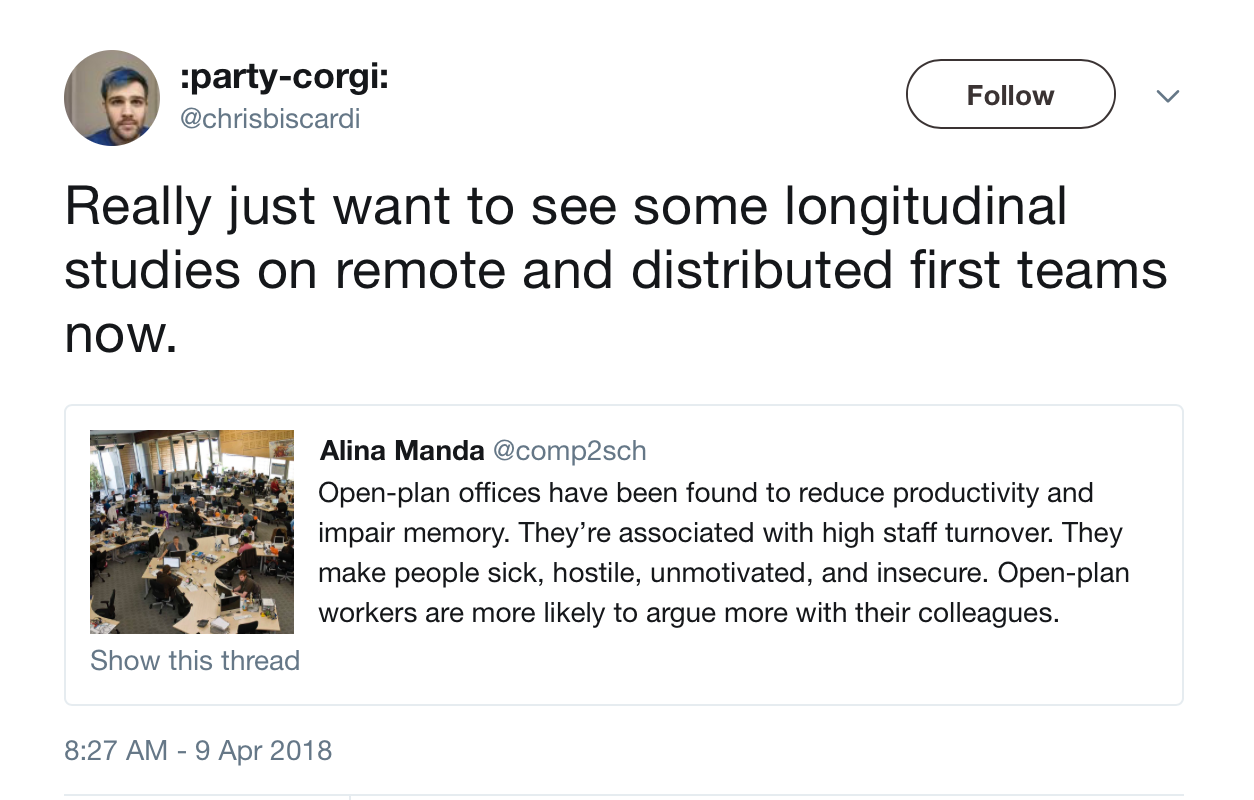
I’m partway through my PhD on remote teams so I know that research exists. Unfortunately, much of it lives behind academic paywalls (and let’s be honest, the articles are long and often difficult to read). As someone who is currently researching remote teams and who has worked in multiple remote teams, I’m deeply invested in the topic and the community, so I thought I’d put together a short answer to @chrisbiscardi’s request.
(more…)What Does It Mean to Be an Effective Tech Lead?
The first time I took on a tech lead role early in my career, I had little clue what I was doing.
Overnight, I found myself suddenly responsible for the technical and project output of a team of four engineers at an underdog startup — even though I had no more training, mentoring, or tools for my new role than the day before, when I was still just a senior individual contributor.
(more…)Checked in at Enterprise 5280 .
Starting the week strong.

Hiking the Table. 9.1 miles.
Posted on Instagram 3:31 pm, April 22, 2018 jQuery(document).ready(function(){ var gmap_mb1d10e34e9fe70ffa5bccca2cee40e33 = { positions : { 438 : new google.maps.LatLng( ‘39.781102777778’, ‘-105.22058611111’ ) }, bounds : new google.maps.LatLngBounds(), // empty for now, we’ll dynamically extend it later map : new google.maps.Map( document.getElementById( ‘gmap_mb1d10e34e9fe70ffa5bccca2cee40e33’ ), { mapTypeId: google.maps.MapTypeId.ROADMAP, center: new google.maps.LatLng( 0, 0 ), zoom: 16 // Seems to be a good zoom for a single point } ), markers : {}, }; // end of gmap // Extend the bounds of interest based on our positions for ( var m in gmap_mb1d10e34e9fe70ffa5bccca2cee40e33.positions ) { gmap_mb1d10e34e9fe70ffa5bccca2cee40e33.bounds.extend( gmap_mb1d10e34e9fe70ffa5bccca2cee40e33.positions[m] ); } // Render markers for ( var m in gmap_mb1d10e34e9fe70ffa5bccca2cee40e33.positions ) { gmap_mb1d10e34e9fe70ffa5bccca2cee40e33.markers[m] = new google.maps.Marker( { clickable: true, map : gmap_mb1d10e34e9fe70ffa5bccca2cee40e33.map, position : gmap_mb1d10e34e9fe70ffa5bccca2cee40e33.positions[m] } ); } // Redraw map to fit our new marker-based bounds gmap_mb1d10e34e9fe70ffa5bccca2cee40e33.map.setCenter( gmap_mb1d10e34e9fe70ffa5bccca2cee40e33.positions[438] ); });
Checked in at North Table Mountain Park .
First Principles: Elon Musk on the Power of Thinking for Yourself
First principles thinking, which is sometimes called reasoning from first principles, is one of the most effective strategies you can employ for breaking down complicated problems and generating original solutions. It also might be the single best approach to learn how to think for yourself.
The first principles approach has been used by many great thinkers including inventor Johannes Gutenberg, military strategist John Boyd, and the ancient philosopher Aristotle, but no one embodies the philosophy of first principles thinking more effectively than entrepreneur Elon Musk.
(more…)If you want to know how we ended up in a cyber dystopia, read Ready Player One
When Ernest Cline’s Ready Player One was published in 2011, the reviews were ecstatic, beatific. It was an “enchanting ,” “accessible ” “nerdgasm ” full of “fascinating social commentary ” that one critic claimed was “the best science fiction novel I’ve read in a decade. ”
The book imagined America in the 2040s entirely through the lens of the 1980s, or at least a narrow sliver of the era: the formative video games, movies, and other nerd-friendly pop culture for the people who came of age during this particular decade. As the novel’s world descends into chaos and poverty, thanks to climate change and a fossil-fuel crisis, most of its citizens spend their days traversing the OASIS, a virtual reality world created by an “eccentric” ‘80s kid named James Halliday.
(more…)Checked in at Los Molinos .
Guild Week at Strava – strava-engineering – Medium
Recently, the Strava Engineering team took a weeklong break from regular product work to focus attention on our core technology platforms. We coined this effort Guild Week. Before explaining Guild Week, it’d be useful to understand what a “Guild” is at Strava.
Like most software companies, Strava started off with a single product development team, consisting of engineers, product managers, and designers. Engineers and designers were “free agents”, and worked on whatever project was highest priority. Eventually, we reached a point where that single team became unwieldy to manage. Product managers couldn’t plan for the medium / long term because they couldn’t count on having engineering and design support. Engineers couldn’t develop expertise in specific areas of the product, and also didn’t have the time to make longer-term investments in more complex product features.
(more…)Checked in at CrossFit Verve .
Today was a mistake. So much pain.

Mid-week rides FTW @kchoffman @michaelarestad #specialized #mtb #enduro #colorado #downhill
Posted on Instagram 8:37 pm, April 18, 2018 jQuery(document).ready(function(){ var gmap_m510a6a9bbadd4edfd5537889301498e8 = { positions : { 903 : new google.maps.LatLng( ‘39.79784’, ‘-105.24801’ ) }, bounds : new google.maps.LatLngBounds(), // empty for now, we’ll dynamically extend it later map : new google.maps.Map( document.getElementById( ‘gmap_m510a6a9bbadd4edfd5537889301498e8’ ), { mapTypeId: google.maps.MapTypeId.ROADMAP, center: new google.maps.LatLng( 0, 0 ), zoom: 16 // Seems to be a good zoom for a single point } ), markers : {}, }; // end of gmap // Extend the bounds of interest based on our positions for ( var m in gmap_m510a6a9bbadd4edfd5537889301498e8.positions ) { gmap_m510a6a9bbadd4edfd5537889301498e8.bounds.extend( gmap_m510a6a9bbadd4edfd5537889301498e8.positions[m] ); } // Render markers for ( var m in gmap_m510a6a9bbadd4edfd5537889301498e8.positions ) { gmap_m510a6a9bbadd4edfd5537889301498e8.markers[m] = new google.maps.Marker( { clickable: true, map : gmap_m510a6a9bbadd4edfd5537889301498e8.map, position : gmap_m510a6a9bbadd4edfd5537889301498e8.positions[m] } ); } // Redraw map to fit our new marker-based bounds gmap_m510a6a9bbadd4edfd5537889301498e8.map.setCenter( gmap_m510a6a9bbadd4edfd5537889301498e8.positions[903] ); });

@akires did a good job with these tulips that I brought back from Amsterdam!
Posted on Instagram 4:42 pm, April 18, 2018
Guitar Solo! Joan @ Globe Hall
jQuery(document).ready(function(){ var gmap_m2a99d0c3f29474d990e5fb2d81926907 = { positions : { 321 : new google.maps.LatLng( ‘39.7780113’, ‘-104.9825363’ ) }, bounds : new google.maps.LatLngBounds(), // empty for now, we’ll dynamically extend it later map : new google.maps.Map( document.getElementById( ‘gmap_m2a99d0c3f29474d990e5fb2d81926907’ ), { mapTypeId: google.maps.MapTypeId.ROADMAP, center: new google.maps.LatLng( 0, 0 ), zoom: 16 // Seems to be a good zoom for a single point } ), markers : {}, }; // end of gmap // Extend the bounds of interest based on our positions for ( var m in gmap_m2a99d0c3f29474d990e5fb2d81926907.positions ) { gmap_m2a99d0c3f29474d990e5fb2d81926907.bounds.extend( gmap_m2a99d0c3f29474d990e5fb2d81926907.positions[m] ); } // Render markers for ( var m in gmap_m2a99d0c3f29474d990e5fb2d81926907.positions ) { gmap_m2a99d0c3f29474d990e5fb2d81926907.markers[m] = new google.maps.Marker( { clickable: true, map : gmap_m2a99d0c3f29474d990e5fb2d81926907.map, position : gmap_m2a99d0c3f29474d990e5fb2d81926907.positions[m] } ); } // Redraw map to fit our new marker-based bounds gmap_m2a99d0c3f29474d990e5fb2d81926907.map.setCenter( gmap_m2a99d0c3f29474d990e5fb2d81926907.positions[321] ); });
Checked in at CrossFit Verve .
Back for more pain.

I bought a bike!
Back in Australia, back in the day, I had a Specialized P3 which I used for some downhill riding. I sold that eventually in San Francisco, after years of not really using it (it’s not a practical city-bike, and I didn’t have easy access to get out and mountain bike with it). When I moved to New York I bought a Cannondale Bad Boy 9 , which was a much better choice for in the city. Fast forward a few years, and living in Denver means I’m close to mountains and a bunch of world-class downhill riding. In 2016 I picked up a Motobecane Boris X9 fatbike, which was fun, but pretty impractical.
(more…)Why our engineering leaders focus on product over process
Who was the best manager you ever had?
Even though all of us have different people in mind, those people probably have a lot in common. Maybe he really cared about you as a person. Maybe she was a brilliant visionary who always knew how to push you to be better. Maybe their leadership styles were different — but I’d wager that their philosophies were the same.
(more…)Why and How to share your Manager README (plus here’s mine)

Photo by Zachary Spears on Unsplash
Creating and sharing a manager readme /operating manual is a great way to reflect on who you are as a leader, what your leadership philosophy is, and what folks can expect from you. I learned this from Lara Hogan ’s wonderful management expectations .
If you’re a manager, you probably spend a lot of time trying to understand how your teammates work best and what they need from you. Naturally, this skews the relationship a little to one side. Opening up and sharing about myself was probably one of my scariest growth moments as a new manager. I wanted to bring my most professional “manager self” to every conversation.
(more…)
Killer day for a ride. Living this new bike!
Posted on Instagram 4:45 pm, April 15, 2018 jQuery(document).ready(function(){ var gmap_m6657433672f286b3dbda4729b0b65912 = { positions : { 1000 : new google.maps.LatLng( ‘39.665250283333’, ‘-105.39451766643’ ) }, bounds : new google.maps.LatLngBounds(), // empty for now, we’ll dynamically extend it later map : new google.maps.Map( document.getElementById( ‘gmap_m6657433672f286b3dbda4729b0b65912’ ), { mapTypeId: google.maps.MapTypeId.ROADMAP, center: new google.maps.LatLng( 0, 0 ), zoom: 16 // Seems to be a good zoom for a single point } ), markers : {}, }; // end of gmap // Extend the bounds of interest based on our positions for ( var m in gmap_m6657433672f286b3dbda4729b0b65912.positions ) { gmap_m6657433672f286b3dbda4729b0b65912.bounds.extend( gmap_m6657433672f286b3dbda4729b0b65912.positions[m] ); } // Render markers for ( var m in gmap_m6657433672f286b3dbda4729b0b65912.positions ) { gmap_m6657433672f286b3dbda4729b0b65912.markers[m] = new google.maps.Marker( { clickable: true, map : gmap_m6657433672f286b3dbda4729b0b65912.map, position : gmap_m6657433672f286b3dbda4729b0b65912.positions[m] } ); } // Redraw map to fit our new marker-based bounds gmap_m6657433672f286b3dbda4729b0b65912.map.setCenter( gmap_m6657433672f286b3dbda4729b0b65912.positions[1000] ); });
How Patreon Levels Engineers (Career Ladder)
Today we are excited to share Patreon’s revamped Engineering Leveling Guide . In Patreon’s early years, we had little in the way of objective criteria for leveling engineers. We’ve come a long way since then, and our engineering organization is much stronger and fairer for it. We want to show you how we define levels now and what it’s like to work at Patreon.
(more…)One of the most frequent questions I hear as I coach managers is, “How do I handle how tired I am as a manager?”
Some managers find themselves working long hours to do hands-on “work-work” after full days of one-on-ones. Some managers find that the labor of managing or more strategic thinking drains their energy significantly faster than the work they did as individual contributors. Some find the context-switching between meetings super taxing.
(more…)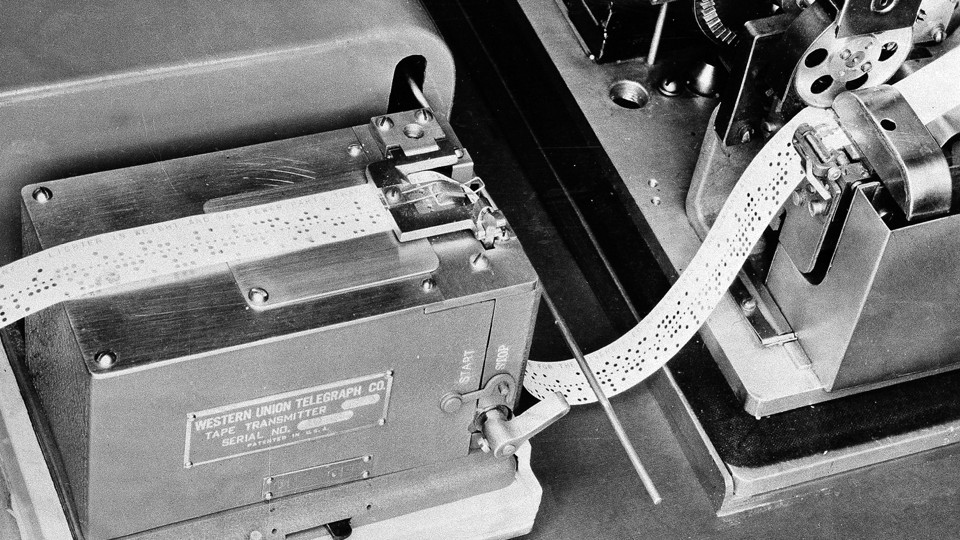
The telegram was a breakthrough in communication technology, which Vannevar Bush imagined could evolve in unprecedented ways.
AP
As Director of the Office of Scientific Research and Development, Dr. Vannevar Bush has coordinated the activities of some six thousand leading American scientists in the application of science to warfare. In this significant article he holds up an incentive for scientists when the fighting has ceased. He urges that men of science should then turn to the massive task of making more accessible our bewildering store of knowledge. For years inventions have extended man’s physical powers rather than the powers of his mind. Trip hammers that multiply the fists, microscopes that sharpen the eye, and engines of destruction and detection are new results, but not the end results, of modern science. Now, says Dr. Bush, instruments are at hand which, if properly developed, will give man access to and command over the inherited knowledge of the ages. The perfection of these pacific instruments should be the first objective of our scientists as they emerge from their war work. Like Emerson’s famous address of 1837 on “The American Scholar,” this paper by Dr. Bush calls for a new relationship between thinking man and the sum of our knowledge. — THE EDITOR
(more…)Prattfalls: Better Communication
A long time ago, my manager sat me down to inform me of my next year’s salary. I was receiving a reasonable raise, it should have been an easy conversation. Once we finished the conversation, I left the room and immediately started reaching out to some recruiters I knew with the intention of finding a new job.
Oops.
One of my ex-coworkers at Netflix, since retired, once told me about a book his father had written about library management. This book, Information of the Image by Dr. Allan D. Pratt, is sadly out of print now. I refer to it often because its first chapter has played a transformative role in how I think about effective communication and ways in which we utterly, delightfully, screw it up.
(more…)You spend years trying to learn new stuff but then look back and realize that maybe like 10 big ideas truly changed how you think and drive most of what you believe.
Brent Beshore recently listed the biggest ideas that changed his life. A few of mine:
Everyone belongs to a tribe and underestimates how influential that tribe is on their thinking. There is little correlation between climate change denial and scientific literacy. But there is a strong correlation between climate change denial and political affiliation. That’s an extreme example, but everyone has views persuaded by identity over pure analysis. There’s four parts to this:
(more…)Hi, everyone! A lot of stuff has happened since I was writing all those blog posts about Aeron chairs 18 years ago. Some of those blog posts are old enough to go to college.
And, also: Stack Overflow will be ten years old soon! Wow! So I thought it would be cool to get the old band back together for a little reunion tour over the next few weeks. I want to catch you all up on some stuff but mostly I want to tell the story of Stack Overflow in a not-completely-disorganized way. With some perspective, it’s clearer now what we did right and what we messed up, so I’ll try to cover the good and the bad over a series of blog posts.
(more…)How to Lead by Noticing and Filling in Gaps
Many years ago, I worked at a five-person startup.
I brought crackers and cheese and fruit that I had bought with my own groceries over the weekend and put them in the mini-fridge, so that we’d have snacks.
As we started to look for another Android engineer for our team, I put together an interview process and blogged about the process, so that we could attract even more candidates.
(more…)Checked in at CrossFit Verve .
Addressing executive swoop-ins – The Year of the Looking Glass – Medium
This was first published on my mailing list The Looking Glass . Every week, I answer a reader’s question.

Photo by James West
Q: How can I address direction from upper management that I suspect will harm or even derail the product? i.e. What is the most effective way to push back on an executive order that I or the team feel is detrimental to the product?
(more…)An Engineer’s Bill of Rights (And Responsibilities)
Power has a way of flowing towards people managers over time, no matter how many times you repeat “management is not a promotion, it’s a career change.”
It’s natural, like water flowing downhill. Managers are privy to performance reviews and other personal information that they need to do their jobs, and they tend to be more practiced communicators. Managers facilitate a lot of decision-making and routing of people and data and things, and it’s very easy to slip into making the all decisions rather than empowering people to make them. Sometimes you want to just hand out assignments and order everyone to do as told. (er, just me??)
(more…)Checked in at Enterprise 5280 .
Closing out the week at the office.
How to make better use of everything you read
I once downloaded a speed-reading app that would flash individual words across my phone. I aggressively set the rate to 400 words per minute and braced for the onslaught. I used this system to parse essays, primers, and long-form interviews, all in the name of advancing my career. Yet, all I had to show for it was a massive headache and a zero-percent retention rate.
(more…)Stop Start Continue Change Management Model
 Introduction to the model – SSCC
The stop start continue change management model is a useful ‘quick and dirty’ tool for looking at service improvement. It can also be used as a technique for generating ideas, solving problems, and negotiating behavior changes between two groups, individuals, or departments
Using the four basic titles (STOP START CONTINUE CHANGE) look at a service or offer and consider each of the actions, top stop elements (or the whole service), start doing something new, continue what is happening (it is working well) or change an element.
(more…)Whether you’re dissecting Adam Smith’s The Wealth of Nations or relaxing poolside with 50 Shades of Grey, reading is, for many of us, a regular source of joy, perspective, and ideas, which enable us to grow personally and professionally. But here’s the catch: We live in a world of never ending content and constant competition for our attention. One study, back in 2009, found that we’re exposed to 100,000 words each day, the equivalent of one quarter of Leo Tolstoy’s War and Peace. And that was before most of us started using our phones for reading texts, emails, or articles instead of just for talking.
(more…)Team Leader Venn Diagram – Making Meetup – Medium
A tool for gaining a shared understanding of responsibilities
Upon arrival at Meetup as a “fractional” VP of Engineering , I began to hear something that I hear at lots of organizations: confusion about team leaders’ roles and responsibilities.
Product teams typically have an Engineering Manager, a Product Manager, and sometimes an Engineering Lead; though Meetup’s Engineering Ladder includes descriptions of each of these roles, the overlap of their responsibilities can lead to ambiguity and confusion. This is definitely a common problem, and not unique to Meetup!
(more…)The modern web contains no shortage of horrors, from ubiquitous ad trackers to all-consuming platforms to YouTube comments, generally. Unfortunately, there’s no panacea for what ails this internet we’ve built. But anyone weary of black-box algorithms controlling what you see online at least has a respite, one that’s been there all along but has often gone ignored. Tired of Twitter? Facebook fatigued? It’s time to head back to RSS.
(more…)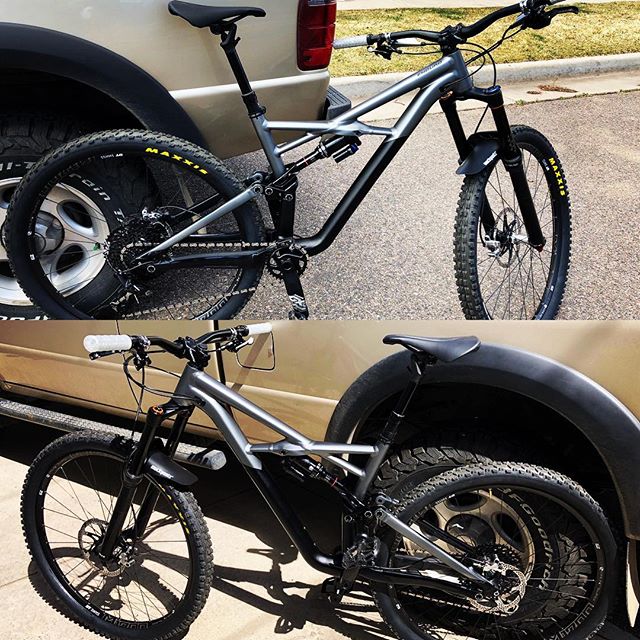
Super stoked to have acquired this new toy. Psyched to get it out on the trail tomorrow.
Posted on Instagram 5:48 pm, March 31, 2018
Write Useful Mission Statements in 3 Easy Steps
The simple of idea of putting a mission statement together for the team makes most managers tremble in fear. It’s a sad situation we’ve gotten ourselves into when leaders fear to express the purpose of an organization (and employees snicker with cynicism at the idea of any attempt.) Why is that? Surely people are more effective when they understand the meaning behind what they do. Why shouldn’t having a clear mission be something that is met with optimism and anticipation?
(more…)Becoming A Manager Of Managers

Illustration by Laura Wright
The move into management is an often discussed topic. We all want to climb the career ladder, yet some dread the day where the only way up is to join management. This is especially true in engineering .
Whether we want to admit or not, hierarchy and management are necessary to run a large company successfully . And while there should be career paths for all kinds of specialisations , it is equally as important to shape the next generation of leaders.
(more…)Engineering Interviewing at Strava – strava-engineering – Medium
We know Engineering interviewing can be stressful, and stress can often make interviews a poor sample of what you can do at work. We want to create an interviewing environment where you can show who you are and what you can do. Hopefully this blog post will help you present your best self during your interviews at Strava!
Our goal during your interview process is to figure out if you will succeed at Strava. We tailor our interviews to gauge how you would do in everyday situations, rather than test intelligence or ask brainteasers.
(more…)I feel like an idiot while doing my job. A lot.
Now there’s a damn good chance I’m actually an idiot, but the self-respecting part of me wants to challenge that notion.
When I get stuck on a task or am looking for recommendations for tools/resources/strategies/solutions/whatever, I often take to Twitter to ask for help.
Seconds after posting my quandary, my stream gets flooded with a host of advice, links, insights, and opinions. This “crowd-sourcing my knowledgesphere” is a wonderful thing. But one word in all those proffered solutions tends to stick out in my mind like a jagged, rusty nail ready to figuratively jam itself into my eye socket.
(more…)